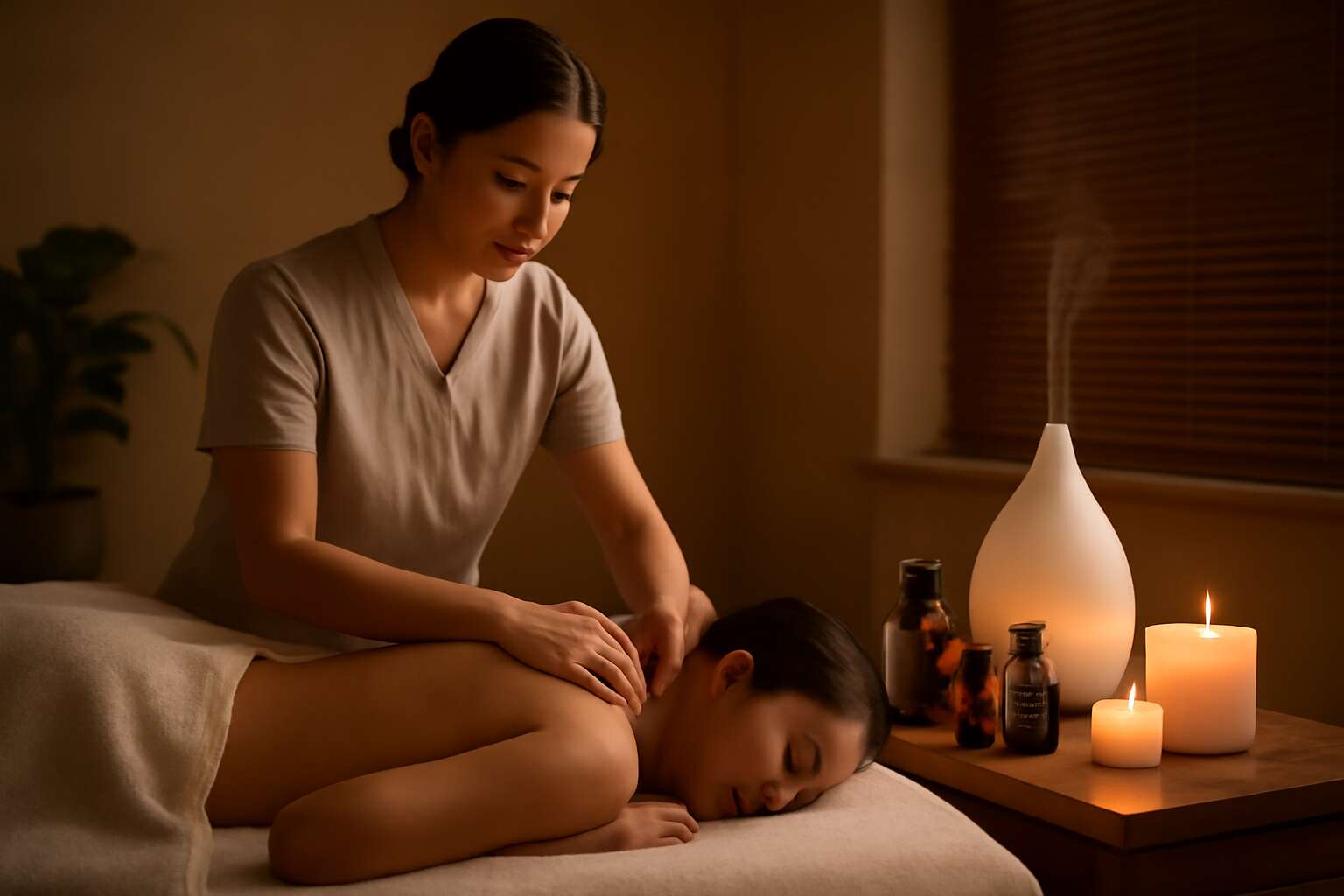
Aromatherapy in Massage: Core Concepts
What Aromatherapy Adds to Massage
A single breath recalibrates the nervous system in minutes, a powerful hook for clients seeking relief. Aromatherapy and massage weave scent and touch into a single, transformative session!
At the core, essential oils travel from nostrils to the brain, touching mood through the limbic system as the therapist works on fascia. The scent can be diffused or layered with topical blends; safety guides choices.
- Depth of relaxation through scent-assisted breathing
- Enhanced circulation and muscle release
- Mindful presence and emotional balance
- Skin-friendly blends and safety awareness
In South Africa, practitioners tailor blends to seasons and cultural preferences, pairing familiar florals with globally revered oils. The result is a ritual that respects climate, lifestyle, and the wellness landscape.
Ultimately, aromatherapy in massage adds meaning—smell bridging physiology and psychology, science and ritual, body and breath.
Popular Essential Oils and Their Benefits
Aromatherapy and massage hinge on scent as a catalyst for nervous-system balance and tissue release. Oils travel from the olfactory nerve to the limbic brain, shaping mood as the therapist works through fascia and breath becomes an additional instrument. The session becomes a dialogue between smell and touch, a choreography rather than a sequence.
Popular essential oils and their benefits include:
- Lavender — promotes relaxation and restorative sleep
- Eucalyptus — clears airways, refreshes the mind, supports circulation
- Peppermint — soothes soreness, eases shallow breathing, sharpens focus
- Citrus blends (orange, bergamot) — lifts mood and adds warmth
In South Africa, blends reflect seasons and cultural taste, with floral notes pairing alongside globally revered oils. Practitioners choreograph diffusion and layering to respect climate, lifestyle, and patient preference, turning a routine session into a ritual. Aromatherapy in massage thus threads physiology and psychology into a cohesive experience, inviting presence, breath, and meaning.
How Diffusion and Topical Application Work
In the hush of a treatment room, a chorus of scent and breath orchestrates healing through aromatherapy and massage. A quiet séance where scent and touch converse; a single exhale can steady a racing heart, and a careful drift of essential oils can soften a tense shoulder. I watch the diffuser plume drift and the room listen.
Diffusion enters through two doors: inhalation and air diffusion. Volatile compounds ride the olfactory nerve to the limbic brain, shaping mood while the therapist’s hands read fascia and breath. A diffuser’s plume becomes a metronome, guiding presence and release.
Topical application wears the belt of the carrier oil, delivering molecules into the skin and underlying tissues. Warmth, dilution, and patch tests keep the session safe; the skin becomes a highway for aroma and touch.
- carrier oil balance and dilution
- skin safety and patch testing
- timing with breath cues
Choosing High-Quality Oils and Carrier Oils
One breath, three oils, a room rewoven. In aromatherapy and massage, the faintest fragrance becomes a compass for the body, guiding release and resonance. Across South Africa’s tranquil studios, therapists choose oils that harmonize with breath, touch, and the rhythms of the day—clarity after work, relief after strain, a sense of rooted calm.
Core concepts start with choosing high-quality oils and carrier oils. Seek pure, well-characterized bottles, with batch COAs and transparent sourcing. Pair them with carriers like jojoba, sweet almond, or fractionated coconut oil to ensure safe, even diffusion and a comfortable glide over the skin.
In practice, professionals note these pillars:
- Purity and sourcing
- Botanical species and COA
- Carrier oil compatibility and patch testing
Selecting Essential Oils for Therapeutic Massage
Relaxation and Stress Relief Oils
Across South Africa’s towns and clinics, the right essential oils can turn a massage into aromatherapy and massage that lingers in the memory. The choice blends mood, skin comfort, and a scent narrative—calm, uplift, grounding—so the treatment feels tailored, not generic. In such moments, relaxation deepens and stress sinks away, leaving a quiet glow that travels beyond the session.
- Calming notes for evening recovery
- Uplifting citrus to counter daytime strain
- Grounding resins for meditation and sleep
Purity and honest sourcing shape the selection. When oils align with season and client needs, the session feels safer and more personal. Such care makes the experience a shared ritual of resilience, nourishing body and spirit with every breath and memory.
Pain Management and Muscle Support Oils
In South Africa’s bustling clinics and wellness studios, selecting essential oils for therapeutic massage pain management and muscle support is where science meets scent. When a blend aligns analgesic and anti-inflammatory notes with the body’s needs, touch becomes more targeted and relief lingers. aromatherapy and massage becomes a precise language of relief rather than a generic fragrance.
- Peppermint: cooling analgesia and refreshing clarity
- Ginger: warming anti-inflammatory comfort
- Rosemary: supports circulation and muscle tone
- Lavender: gentle muscle soothe and calm
Choosing these oils is about season, client history, and the message the session aims to convey—not a perfumed afterthought, but controlled comfort that respects the body’s signals through aromatherapy and massage.
Mood Enhancers and Mental Clarity Oils
Mood drives the room as much as technique in South Africa’s therapy spaces! A precise mood-enhancer blend can sharpen focus, ease conversation, and set a session’s pace—proof that aromatherapy and massage is a coordinated language of presence, not a mere fragrance.
For mood and mental clarity, citrus brightness and herbal calm work in concert to melt fatigue and keep clients present. Oils chosen for this aim should feel clean, not overpowering.
- Bergamot—bright mood lift
- Clary Sage—clarity and balance
- Lemon—focus and vitality
- Rosemary—alertness and flow
Choosing blends is about reading the room: the client, the time of day, the desired tone. When mood and clarity align, touch carries more meaning and memory lingers in the air.
Oil Blends for Specific Needs
In the quiet theatre of a therapy room, momentum is brewed as much by mood as by stroke. South African therapists note a 30% rise in session cohesion when scent and touch move as one. Selecting essential oils for specific needs is an art, a choreography of notes and intention in aromatherapy and massage. When focus, calm, or recovery steers the session, the oils answer with clarity, not clamor.
To guide your blends, consider the room as a scroll that reads your intention:
- Focus and energy: Lemon, Bergamot, Rosemary
- Calm and balance: Clary Sage, Lavender, Sweet Marjoram
- Recovery and warmth: Ginger, Eucalyptus, Copaiba
Read the room, sense the hour, and let the blend write a fragrant signal between therapist and client. When the mood and language align, presence deepens and memory lingers in the air!
Safety and Patch Testing
One drop can change a session, so patch testing is non-negotiable. Selecting essential oils for therapeutic massage safety begins with skin awareness. In aromatherapy and massage, even common oils can trigger reactions. A patch test shields client and therapist, especially in South Africa’s diverse climate and skin types.
Patch testing steps:
- Dilute oils to 1–2% with a neutral carrier before applying.
- Apply a small amount to the inner forearm or behind the ear.
- Wait 24 hours and watch for redness, itching, or swelling.
- If no reaction occurs, proceed with broader use in a session—still document results.
Always dilute, avoid vulnerable groups (pregnant clients, children), and document outcomes. For safety, select high-quality, pure essential oils and track any reactions in client notes. Aromatherapy and massage thrive on cautious hands and clear communication.
Techniques and Protocols for Oil-Enhanced Massage
Pre-Treatment Consultation and Skin Prep
“Care is the first therapy,” a guiding whisper in every consultation. In aromatherapy and massage, a careful pre-treatment discussion maps sensitivities, medications, and fragrance preferences, charting a safe, scented voyage before the first touch. In South Africa, we align scent profiles, dilutions, and touch patterns to the guest’s skin and breathing.
- Comprehensive intake interview and consent alignment
- Allergy and fragrance tolerance considerations
- Skin preparation strategy: cleansing, warmth, and barrier protection
Skin preparation becomes ceremony: a gentle cleanse to remove residues, a quick temperature check, and a warm carrier oil ready on the palms. Light exfoliation may be offered if appropriate, followed by a quiet hydration step and breathable draping, ensuring comfort from first contact to the last stroke.
Dilution Ratios and Carrier Oils
An expert blend remains a whispered negotiation between scent and skin. In aromatherapy and massage, the precision of dilution marks the line between serenity and irritation. The right ratio honors breathing, minimizes irritation, and respects South Africa’s diverse climates, where heat and dryness can alter oil behavior. It’s a subtle choreography: glide, scent, and touch moving as one rather than competing forces.
- Dilution strategy: begin with conservative percentages and refine through client feedback to stay within safe, comfortable thresholds.
- Carrier oil selection: choose stable, skin-friendly bases (jojoba, grapeseed, or almond) that suit the climate and massage area.
- Application approach: keep palms warm, apply in light strokes, and observe skin and breath to maintain harmony.
In this method, touch and aroma become one responsible art, inviting clients into a space where intention matters as much as scent.
Application Methods: Strokes, Pressure, and Areas
Breath slows, heartbeat eases, and the room becomes a clock of quiet. In aromatherapy and massage, a measured touch conducts the mood; “Touch is the quiet language of healing,” a mentor once whispered, and I hear the sentiment linger like steam on the skin, even in South Africa’s sun-warmed rooms.
Strokes form the map of the session. The following techniques drift through the muscles as if in a nocturnal waltz:
- Effleurage — long, gliding sequences that invite calm and prep the tissues.
- Petrissage — gentle kneading to release knots and restore rhythm.
- Tapotement — rhythmic percussion to awaken superficial layers and ease fatigue.
Pressure should mirror breath: light to moderate along the spine, shoulders, and limbs, adjusting to each client’s response. Areas—back, neck, hips, calves—get attention with mindful contact and skin-tempered oil to maintain harmony rather than friction.
Cranial, Facial, and Foot Treatments
One session can recalibrate the nervous system like a metronome finding its tempo. In aromatherapy and massage, the ritual blends scent with touch to quiet the mind and awaken the body’s rhythms, even in South Africa’s sun-warmed rooms—an ideal stage for cranial, facial, and foot treatments.
Techniques unfold in a gentle choreography across cranial, facial, and foot zones. For the cranium, light effleurage and temple circles cradle the scalp; the face benefits from feather-light strokes and subtle lymphatic clearing; the feet respond to plantar kneading and arch-lengthening sweeps. It’s a light waltz, not a marching band.
- Cranial: scalp effleurage, temple circles
- Facial: feather-light strokes, lymphatic clearing
- Foot: plantar kneading, arch sweeps
Protocols honor aroma and anatomy: warmed, skin-friendly oils are layered with a patient tempo and mindful breath. The result is a room where fragrance threads drift and stillness lingers, a quiet testament to the approach.
Safety, Contraindications, and Aftercare
Who Should Avoid Oils and How to Screen Clients
A single drop can shift a mood, but safety keeps the balance in aromatherapy and massage. In practice, use clean oils, proper dilution, and a well-ventilated room—because a calm session deserves careful preparation!
Contraindications vary by individual. Pregnancy, recent surgery, skin conditions, photosensitivity, epilepsy, and some medications can raise risk. Local climate and skin types in SA may heighten sensitivity to certain oils.
Aftercare supports lasting benefits. Hydration helps, avoid intense heat after a session, and allow skin to breathe. Note lingering scent, and report any irritation or headaches promptly.
Screening supports safe aromatherapy and massage experiences.
- Pregnancy or breastfeeding
- Epilepsy, seizures, or asthma
- Severe liver/kidney disease or medications
Allergy Testing and Sensitivities
Nearly 70% of clients report a calmer mood after a tailored aromatherapy and massage session, but safety keeps the balance. Allergy testing and sensitivities are essential before any essential oils touch skin.
- Patch test on a small area (inner forearm) with the chosen oil.
- Wait 24 hours for redness, itching, or irritation.
- Discontinue use and consult a therapist if a reaction occurs.
Contraindications vary by individual. Pregnancy, recent surgery, skin conditions, photosensitivity, epilepsy, and some medications can raise risk. Local climate and skin types in South Africa (SA) may heighten sensitivity to certain oils.
- Pregnancy or breastfeeding
- Epilepsy, seizures, or asthma
- Severe liver/kidney disease or interactions with medications
Aftercare supports lasting benefits: hydration helps, avoid intense heat after a session, and allow skin to breathe. Note lingering scent, and report any irritation or headaches promptly. Screening supports safe experiences.
Storage, Expiration, and Handling
Safety in aromatherapy and massage hinges on disciplined storage and precise handling. Oils belong in amber glass, tightly capped, kept in a cool, dark cabinet. Shield them from heat and sunlight, and label batches and expiry dates clearly.
Contraindications vary by individual. Pregnancy, epilepsy, asthma, and severe liver or kidney disease, or certain medication interactions, heighten risk. South Africa’s climate and diverse skin types can amplify sensitivities to some oils.
Aftercare and handling: store, use, and dispose responsibly. Always label batches, monitor expiry dates, and keep tools sanitised. If irritation occurs, discontinue use and consult a therapist.
- Store in a cool, dark place away from direct sunlight.
- Check expiry dates before use;
- Use clean tools and proper dilution to prevent contamination.
Post-Session Care and Hydration
In the quiet after a session, a striking truth often emerges: true relaxation arrives when safety rituals are cherished. ‘Safety is the map that guides every breath,’ a seasoned therapist reminds me, and aromatherapy and massage becomes a rite—an enchanted, professional practice that respects body, scent, and room alike!
Safety hinges on recognizing contraindications: pregnancy, epilepsy, asthma, or severe liver or kidney disease, and certain medication interactions. South Africa’s climate and diverse skin types can amplify sensitivities to oils, so precise intake and individual screening remain paramount.
- Hydrate after your session and allow time for rest.
- Avoid hot showers for a few hours to safeguard oil balance.
- Note any irritation and consult your therapist if it persists.
Post-session care and hydration are the final weave in the tapestry—gentle movement, warmth, and mindful breathing help anchor the benefits long after the door closes.


0 Comments