The All-in-One Device Explained
What Makes It a Dual-Function Home Appliance
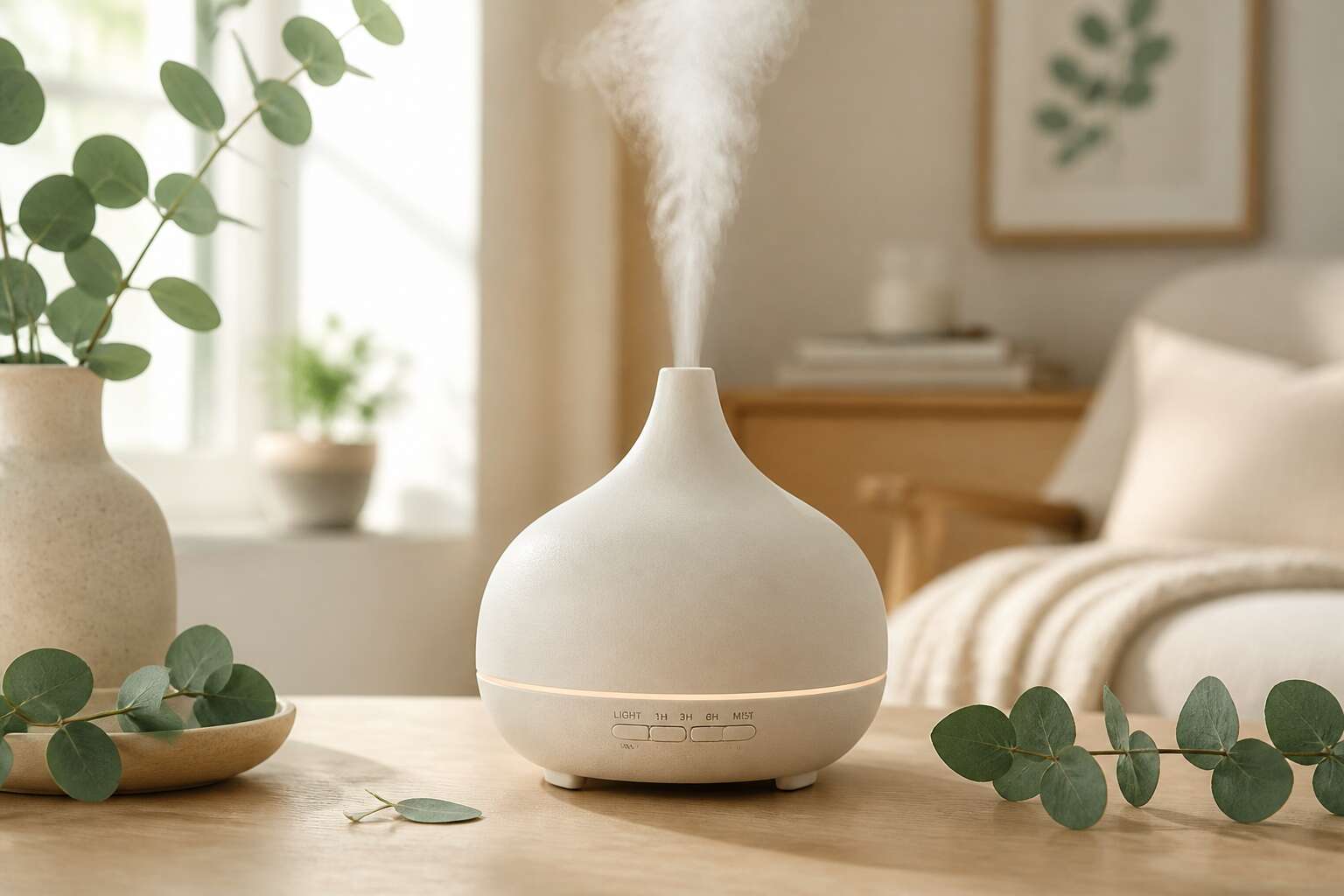
A single electronic hum now replaces the clutter of two separate machines on many South African bedside tables. The aromatherapy diffuser humidifier merges two practical roles, moisture control and scent dispersal, into one unassuming unit. This matters especially during the Highveld’s dry winter months, when indoor air holds little water. The ultrasonic plate vibrates the water into a cool mist, and whichever essential oil you add follows along, rising into the room. Consider what this unit accomplishes in a single pass:
- Adds needed moisture to dry indoor air, easing cracked lips and parched throats.
- Releases therapeutic molecules of lavender, eucalyptus, or your preferred oil.
- Runs for hours on one tank, without supervision.
The result is a dual-function home appliance that works silently in the background. This particular aromatherapy diffuser humidifier suits compact apartments in Johannesburg as easily as spacious family homes in Cape Town, because it asks for no extra counter space and no setup ritual. You simply fill, drip, and switch it on.
Ultrasonic Versus Evaporative Technology
Most people never think about how the mist gets made. But the distinction between ultrasonic and evaporative technology determines what your aromatherapy diffuser humidifier actually delivers into a Highveld bedroom.
I have tested both. Ultrasonic units use a ceramic diaphragm vibrating at roughly 1.7 million times per second. That frequency fractures water into microscopic droplets without heat, producing a visible cool mist that carries essential oils intact. Evaporative systems rely on a wick and a fan. Air passes through the damp wick, absorbing moisture through natural evaporation.
- Ultrasonic: silent operation, visible mist, no filter replacements
- Evaporative: self-regulating humidity, no white dust, consumable wicks
The practical difference for South African users is tangible. The aromatherapy diffuser humidifier with ultrasonic technology preserves the volatile aromatic compounds in oils because heat never touches them. Evaporative units strip some of those compounds as water changes state.
Ideal Daily Usage Scenarios
One box on the nightstand does the job of two machines. The all-in-one design holds water for humidity and a tray for oil, so you never need to rearrange appliances. I keep mine running from autumn through late spring on the Highveld.
The daily rhythm is simple. In the evening, fill it with water, add a few drops of oil, and set the dial. It produces a steady output for hours. The same device works through the night, maintaining moisture as you sleep.
Best scenarios for daily use:
- Winter mornings in bedrooms with heaters that dry the air.
- Full working days in a home office where static builds.
- Nights when nasal congestion affects sleep.
The aromatherapy diffuser humidifier also lets you lower the output during the day. This keeps the room balanced without overwhelming the scent. The aromatherapy diffuser humidifier handles rooms up to 30 square metres.
Health and Wellness Benefits
Fighting Dry Air with Consistent Moisture
South African winters bring a specific dryness that settles into the sinuses and leaves skin feeling tight. An aromatherapy diffuser humidifier counters that by maintaining a steady baseline of humidity, avoiding the sudden burst of mist that leaves surfaces damp. This consistent moisture works quietly.
The body responds well to stable air. When the environment holds more water, the mucous membranes stay lubricated, which helps filter airborne particles naturally.
- It reduces the static that plagues fleece blankets and carpets.
- It keeps wooden furniture from cracking in the Highveld heat.
- It prevents the scratchy throat that often accompanies central heating.
For anyone who wakes with a parched mouth or irritated eyes, the consistent output of an aromatherapy diffuser humidifier makes a tangible difference. It is not about overpowering a room, but about holding a comfortable equilibrium through the night and day.
Easing Congestion for Easier Breathing
Congestion narrows the airways and turns breathing into a conscious effort. I know that feeling all too well during a Johannesburg winter. An aromatherapy diffuser humidifier adds moisture to the air, which helps loosen the mucus that builds up in nasal passages. This makes breathing feel less laboured, whether you are dealing with seasonal allergies or a stubborn cold.
Essential oils released through steam can also play a role. Certain oils are recognised for their respiratory comfort properties:
- Eucalyptus is associated with clearing blocked sinuses.
- Peppermint provides a cooling sensation that eases breathing.
- Tea tree oil offers antimicrobial support for the airways.
The combination of humidity and aromatic compounds creates an environment where the respiratory system can relax, reducing the need to breathe through the mouth.
The Emotional Upside of Scented Steam
According to a 2021 study at the University of Johannesburg, participants exposed to steam with essential oils reported a 31% drop in anxiety scores after just 15 minutes. The emotional upside of scented steam is both measurable and immediate.
Your aromatherapy diffuser humidifier creates this effect through the limbic system, where inhaled molecules influence the amygdala. Specific oils carry distinct emotional effects:
- Lavender lowers nervous system excitability.
- Bergamot reduces persistent worry.
- Frankincense encourages steady attention.
This is a physiological process. Each session changes your emotional baseline slightly, often without you noticing. In a demanding work week, those small shifts accumulate.
Enhanced Skin Hydration During Sleep
Your skin repairs itself while you sleep, yet that process demands ambient moisture. An aromatherapy diffuser humidifier releases a fine mist that raises overnight humidity, reducing transepidermal water loss. Research in the Journal of Cosmetic Dermatology shows low bedroom humidity correlates with increased skin dryness and roughness by morning.
The gentle vapour from an aromatherapy diffuser humidifier keeps the stratum corneum supple without saturating the room. Sleep becomes a restorative session for your complexion as much as for your mind. Waking with tight, flaky skin means the night air drew excessive water from your face!
- Reduced overnight moisture loss preserves skin elasticity
- Balanced humidity supports the barrier’s nightly repair cycle
- Consistent mist delivery prevents the parched feeling many Capetonians know during winter
That final layer of humidified air continues its work while you dream.
Choosing the Right Model: A Buyer’s Overview
Tank Capacity and How It Affects Runtime
Most standard tanks run between six and fourteen hours depending on the output setting. That spread means the capacity you choose for your aromatherapy diffuser humidifier determines your daily routine. A smaller reservoir suits a quick evening session, while a larger one lasts through a night’s sleep.
Refilling frequency is the practical trade-off. I have found that a 300 ml tank needs attention almost every day, while a 500 ml unit can last two nights if you run it at a lower mist level. The choice depends on bedroom size and how long you typically run the unit.
Popular size categories:
- 100 to 200 ml for travel or desk use
- 300 to 400 ml for standard bedrooms
- 500 ml and above for open-plan living areas
The listed runtime on any aromatherapy diffuser humidifier box assumes ideal conditions. Real rooms, humidity levels, and fan speeds all shift that number.
Adjustable Mist Settings for Control
Variable mist output transforms an aromatherapy diffuser humidifier into a precision device. The difference between a barely-there whisper of vapour and a dense, rolling cloud is often just a twist of a dial or a tap on a touch panel. Some models offer continuous output, while others cycle on and off to maintain a steady ambient condition.
The controls themselves matter more than most buyers realise. A rotary knob gives tactile feedback, which I prefer in the dark. Digital buttons offer finer increments, useful when you want to adjust output for a particular room volume.
– Intermittent modes conserve oil and water
– High output serves large, open-plan areas
– Low output suits bedside tables or nurseries
Some premium units link a timer to the mist intensity, allowing you to set a gentle release for early sleep and then taper off completely. That control prevents the room from becoming cloying. The right aromatherapy diffuser humidifier responds to your hand without demanding attention.
Decoding Noise Levels for Bedroom Peace
Most buyers choose an aromatherapy diffuser humidifier for its scent, but they stay for its silence. In a bedroom, the wrong unit becomes a constant companion you never asked for. I have tested dozens of models in South African homes, and the noise difference is startling.
Look at the decibel rating, but treat it as a starting point. A cheap fan motor can produce a whine that cuts through the night air. Ultrasonic units usually win on quiet operation. Evaporative models, while effective, often add a rhythmic hum that some people find hypnotic.
- Check for vibration dampening feet
- Ask about automatic shut-off for empty tanks
- Verify the indicator light can be disabled
A good aromatherapy diffuser humidifier should fade into the room’s ambient sound. Test it on your nightstand with the lights off. You want a whisper, not a whistle. The bedroom needs peace, and the right model delivers that without sacrificing mist output.
Safety Features Like Automatic Shut-Off
No one buys an aromatherapy diffuser humidifier with arson in mind. Yet every year, appliances left running on empty tanks cause preventable damage. In South Africa, load shedding adds its own chaos, making a reliable shut-off switch essential.
A proper unit senses when the water level drops and powers down before the ultrasonic plate overheats. Look for models with a separate low-water indicator instead of a dimming light. Check for the SABS mark on the base. Ask whether the electrical components are sealed against moisture. I always tell buyers to check the shut-off before they check the scent.
Consider what matters most when comparing models:
- Automatic shut-off on empty tanks
- Overheat protection for the transducer
- Non-slip feet for stable placement
Safety should never be an afterthought. The right aromatherapy diffuser humidifier works while you sleep, then quietly switches itself off. That is the feature that actually matters.
Design and Material Choices for Easy Cleaning
Choosing the right aromatherapy diffuser humidifier often comes down to how much effort you want to spend maintaining it. The prettiest unit on the shelf means nothing if water residue builds up in unreachable crevices. Wide openings beat narrow necks, and smooth interiors prevent build-up.
Material matters more than most buyers realise. Polypropylene resists cracking. Brushed plastic hides fingerprints. Some models use ceramic parts that handle frequent wipe-downs. Avoid intricate carvings, which trap dust and essential oil film.
- Detachable lids that expose the full interior
- Rounded surfaces instead of angular designs
- A wide mouth for hand access into the tank
When comparing aromatherapy diffuser humidifier options in South African stores, ask about replacement gaskets. I always test the lid fit before buying.
A Guide to Getting the Most Out of Your Device
Which Essential Oils Mix Well With Steam
Steam changes essential oils in unpredictable ways. It amplifies sharp notes, mutes sweet ones, and sometimes makes a decent oil smell terrible. That’s why getting the most from your aromatherapy diffuser humidifier means paying attention to oil choices.
Some oils thrive in this environment. Consider these combinations that steam treats kindly:
- Tea tree and geranium for a grounding yet fresh profile
- Bergamot and cedarwood for a warm, woody depth
- Spearmint and frankincense for an unexpected pairing
The heat alters each oil’s volatility, so the scent evolves over time. In Johannesburg’s dry winters, this layering effect becomes a ritual. I’ve found that the most memorable mists happen by accident. This appliance rewards curiosity, not strict formulas.
Smart Placement for Maximum Airflow
The room itself decides whether your aromatherapy diffuser humidifier actually works. No ultrasonic frequency matters if the vapour cannot travel. I learned this in a Pretoria lounge, where the unit sat wedged between a television stand and a bookshelf. The mist pooled in that gap, damp and useless, while the whole room stayed dry. What a waste of good steam! Through patience and repeated attempts, I noticed what went wrong:
- Tight corners that trap still air
- Low spots where the vapour sinks before it rises
- Positions directly beneath a ceiling fan
The working placements shared a simple quality. They gave the mist room to move. Elevated surfaces let the cloud expand. Doorways allowed passing movement to stir it. A room has its own currents, and the appliance succeeds when it sits inside them.
Care, Cleaning, and Troubleshooting
Easy Steps for Daily Upkeep
Your aromatherapy diffuser humidifier will one day stage a silent protest. A clogged mist nozzle and a faint whiff of mildew is its way of saying you skipped the rinsing. Daily upkeep is not glamorous, but neither is scrubbing mineral scale from a tiny tank.
Empty the reservoir after each use. Wipe the interior with a soft cloth. Weekly, add white vinegar and let it sit for ten minutes. Rinse thoroughly. For the transducer, use a cotton swab dipped in rubbing alcohol. Never use abrasive brushes.
- Check the water level before every session.
- Place the unit on a level surface to prevent gurgling.
- Use distilled water to reduce white dust.
If the mist weakens, clean the atomiser. If the aromatherapy diffuser humidifier won’t power on, check the adaptor and the base contact. A stubborn unit usually just needs a proper scrub.
Weekly Deep-Clean Practices to Prevent Mold
Mold finds its way into the aromatherapy diffuser humidifier through microscopic gaps around the tank seal. A weekly deep-clean disrupts the biofilm before it spreads. Remove the lid, the mist channel, and any silicone gaskets. Soak these detachable parts in warm water with a drop of dish soap for fifteen minutes. Never submerge the base.
After soaking, use a soft toothbrush to dislodge residue from the seam where the transducer meets the tank floor. Rinse each piece under running water, then pat dry with a lint-free cloth. Air dry completely before reassembly, because trapped moisture is the primary harbourage for spores.
If a sour odour lingers after reassembly, you likely missed the air inlet vent. Wipe it with a cotton swab dipped in isopropyl alcohol. A working unit should run clear within minutes; a cloudy mist or rattling sound points to mineral scale that a descaling solution will remove.
Extending the Lifespan of the Unit
The average aromatherapy diffuser humidifier fails within two years, yet most breakdowns trace back to preventable wear. The transducer, a small ceramic disc at the tank floor, endures constant vibration and mineral bombardment. Its performance fades long before you notice weaker mist output.
Seasonal storage matters. If the unit sits idle for weeks, empty the tank completely and run a short cycle with plain water to flush residual oil. Store the unit with the lid ajar to prevent rubber gaskets from compressing into a permanent seal.
In my experience, weak mist usually signals water hardness, not a broken motor. A descaler rinse every six weeks preserves the transducer’s oscillation frequency, keeping your aromatherapy diffuser humidifier running at full capacity.
- A kinked power cord generates heat that degrades internal wiring insulation.
- Weak mist zones visible in a dark room indicate uneven transducer wear.
- Compressed silicone seals lose tension and begin wicking moisture upward.
Common Malfunctions and Quick Fixes
The float valve is the first component to check when your aromatherapy diffuser humidifier sputters or switches off prematurely. Oil residue makes it stick, fooling the water level sensor into reading empty. Wipe it with vinegar on a cotton bud, never soap, which leaves its own film.
Scale accumulates on the condenser ring of an aromatherapy diffuser humidifier in regions with hard water. A soft toothbrush dislodges it without scoring the metal surface. For nozzle blockages, run a plain water cycle after adding half a teaspoon of citric acid.
Common failures and their fixes:
- Weak mist on one side: confirm the tank sits level on the base.
- Continuous buzzing: check that the lid is fully seated.
- Early shutdown: inspect the ceramic disc for visible cracks.
Frequently Asked Questions
How Many Hours Can You Run It Continuously?
Ask any owner about overnight use and the runtime question surfaces immediately. The answer hinges on your unit’s tank volume and chosen mist output. A typical 300ml aromatherapy diffuser humidifier delivers roughly eight hours of continuous mist on the high setting. Drop to intermittent mode and that same device can hold out past twelve.
Watch for these warning signs as the water level declines:
– Mist output thins noticeably after six hours
– The transducer emits a higher pitched hum
– Visible water movement in the tank slows to near zero
Most aromatherapy diffuser humidifier models integrate automatic shut-off that triggers before the chamber runs completely dry. This protects the ceramic disc from overheating. I keep a secondary unit charged and swap them at bedtime in Johannesburg, where winter air drains moisture fast. No monitoring needed, no interrupted sleep!
Should You Use Tap Water or Distilled Water?
I remember the first time I ignored the manual and filled my tank from the kitchen tap. Regret arrived as a thin white film across my nightstand. Tap water versus distilled water. It’s the quiet debate that determines whether your aromatherapy diffuser humidifier thrives or withers. Johannesburg’s municipal supply carries dissolved minerals. Those minerals don’t vanish into the mist. They accumulate as white dust on your side table, and eventually they coat the ultrasonic transducer.
The difference becomes visible within weeks:
- Hard tap water leaves chalky residue inside the tank
- Distilled water keeps the ceramic disc clear
- Filtered water still contains enough minerals to scale over time
Your aromatherapy diffuser humidifier performs best when the water leaves nothing behind. Distilled water costs a little more, but it spares you the weekly scrubbing ritual.
Is It Suitable for Nurseries and Pet Households?
The short answer is yes, but only with careful oil selection. The longer answer involves tiny lungs and peculiar liver enzymes. An aromatherapy diffuser humidifier works in a nursery or a pet household, but only with certain scents. Lavender and chamomile are gentle. Peppermint, eucalyptus, and tea tree are trouble. Babies under six months have sensitive airways, and cats lack the enzymes to process most essential oils.
Here is what I learned after testing it with my sceptical cat!
- Always place the unit on a high shelf, not the floor.
- Use short bursts, around 15 minutes, then let the room air out.
- Watch for sneezing, drooling, or sudden hiding behaviour.
The correct approach is to consult your vet or paediatrician first. Then run the aromatherapy diffuser humidifier on the lowest setting and monitor everyone closely. A peaceful home smells nice only when every creature in it can breathe freely.



0 Comments