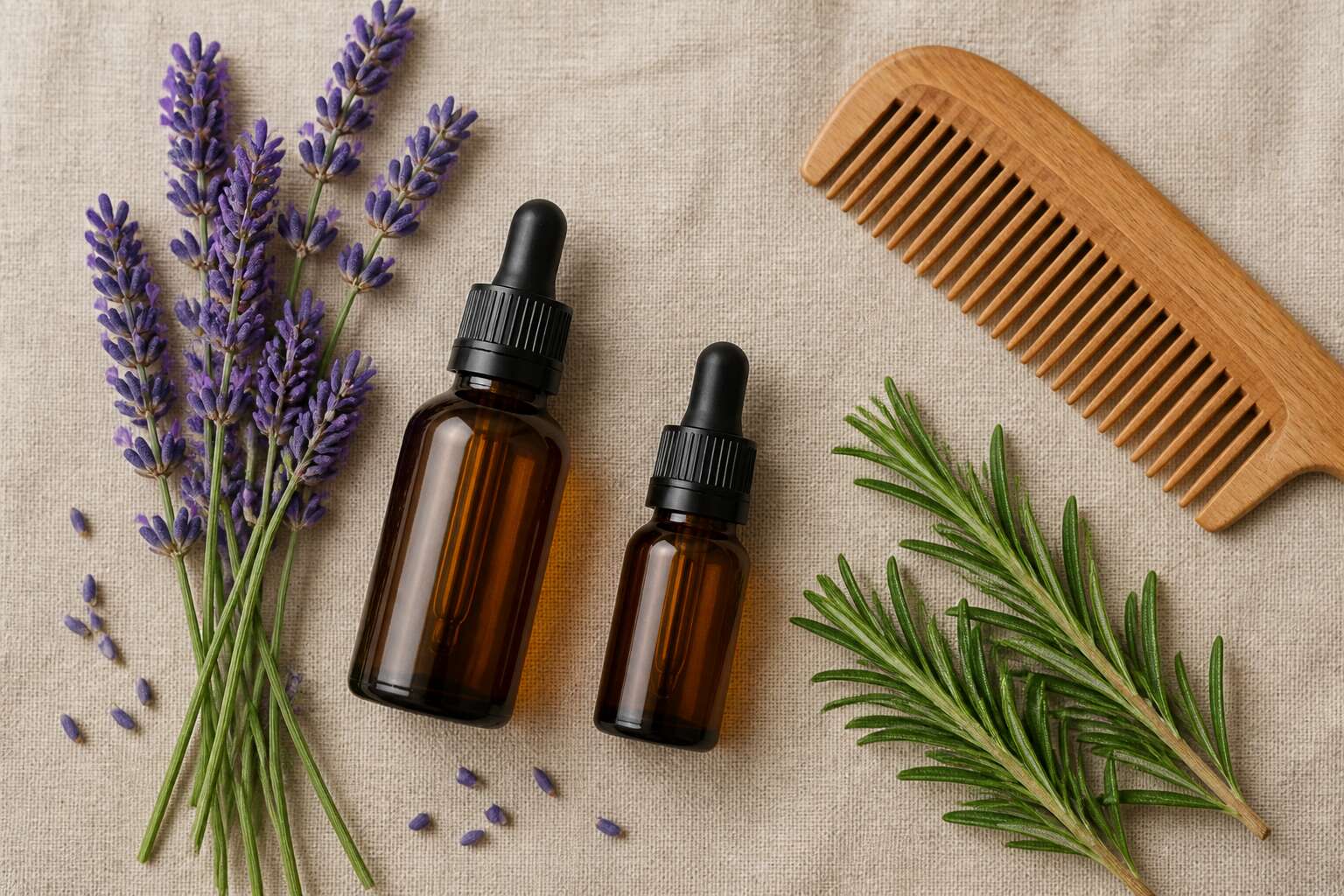
Essential Oils That Promote Hair Growth
In the water-scarce Karoo, a woman’s hair tells stories of sun and survival. Yet the quiet practice of aromatherapy for hair has revived more than a few weary scalps in my community. Essential oils like rosemary and peppermint stimulate follicles with a gentle urgency.
- Rosemary oil increases blood flow to the scalp.
- Cedarwood oil balances oil production.
- Thyme oil strengthens weak roots.
The process is unhurried. These oils work slowly, coaxing new life from dormant roots, one drop at a time.
How to Use Essential Oils Safely on Your Scalp
Essential oils are potent, and their molecular structure allows rapid skin penetration. That’s why applying them straight to your scalp causes chemical burns, not relief. In South Africa’s humid coastal regions or dry Highveld, the right approach matters even more.
I always start with a carrier oil. Jojoba, sweet almond, or fractionated coconut oil are reliable buffers. Mix three to five drops of your chosen essential oil into one tablespoon of carrier. Then, do a patch test behind your ear and wait a day. No shortcuts here.
- Cinnamon and clove are hot oils, so halve the drop count.
- Citrus oils like bergamot make your scalp sun-sensitive, so use them at night.
This careful method turns aromatherapy for hair into a safe, effective practice.
The Science Behind Scent and Hair Health
When you inhale a scent, it travels to the amygdala and hippocampus before your conscious brain even registers it. That is why rosemary oil can trigger a sense of calm, or peppermint can jolt you awake. Your hair follicles are not passive tissue. They respond to hormonal shifts and blood flow, both influenced by the limbic system. Your scalp is basically a mood ring for your nervous system!
Consider these physiological changes:
- Increased circulation from stimulating notes like eucalyptus
- Reduced cortisol when lavender signals relaxation
- Sebum regulation as scent molecules interact with receptors
This neurocutaneous link means aromatherapy for hair isn’t mere pampering. It’s a targeted interaction between volatile compounds and your nervous system. The scalp is richly innervated, so what you smell indirectly shapes what your roots experience. In South Africa, where the sun and humidity stress hair daily, this scent driven pathway matters more than you might expect.
Synergistic Blends for Common Hair Concerns
There is something quietly alchemical about blending essential oils for scalp vitality. Aromatherapy for hair works best when you understand the chemistry beneath the fragrance. Dry, brittle strands respond to lavender and geranium in a jojoba base, while oily roots soften under cypress and lemon. The secret is synergy, where each oil modifies the next.
South African weather complicates things. Humid Durban air demands lighter blends, while Highveld winters call for richer carriers. Consider these proven pairings for stubborn concerns:
- Rosemary and cedarwood for thinning edges
- Tea tree and eucalyptus for persistent flaking
- Chamomile and sandalwood for a tender, irritated scalp
You can adjust each recipe seasonally without losing effectiveness. The result is bespoke treatment, mixed fresh in minutes. Your scalp changes with the climate, and your oils should follow.
Lifestyle Habits That Complement Your Essential Oil Routine
Most people overlook the scalp’s daily stress. Sun exposure, humidity, and city pollution strip natural oils. That’s why aromatherapy for hair works best when paired with intentional routines.
I’ve found that simple adjustments amplify results. Drink enough water, since dehydrated skin weakens follicles. Eat protein-rich meals, as keratin needs building blocks. And protect your hair from harsh weather.
- Stop washing with hot water.
- Massage your scalp for five minutes daily.
- Sleep on a silk pillowcase.
These habits support your oil blend’s absorption. A consistent schedule matters more than intensity. Your hair responds slowly, so patience pays off.



0 Comments